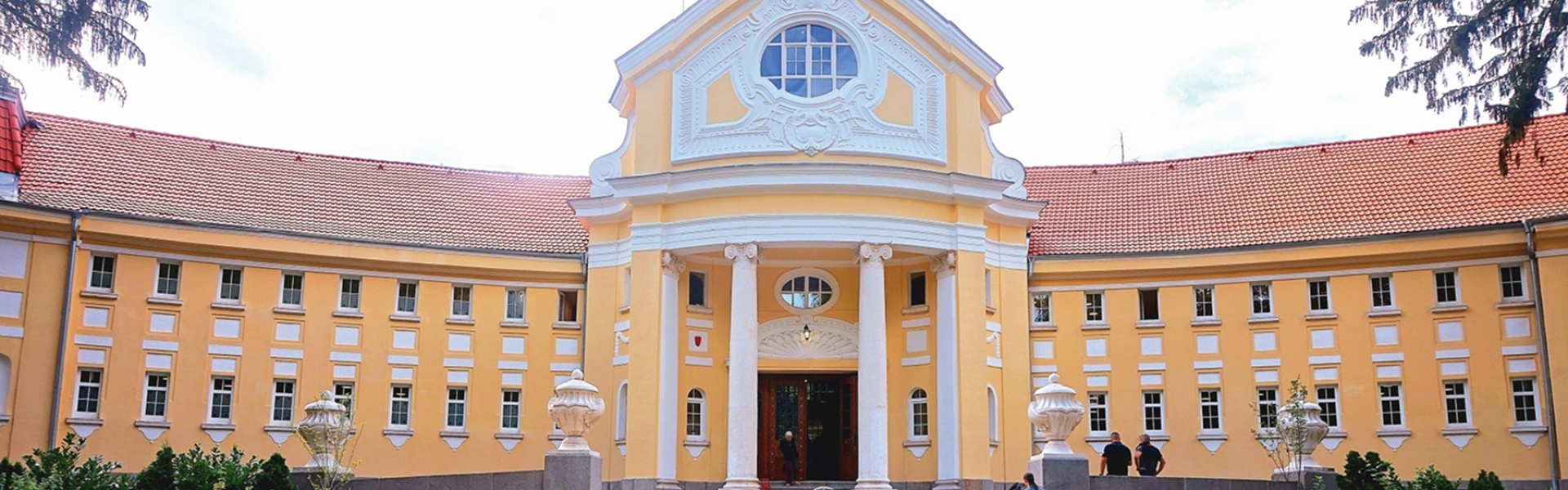
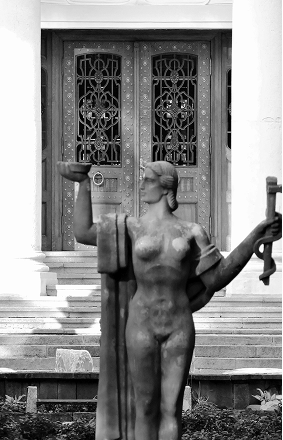
The Central Mineral Bath in Bankya, designed by Munich architect Karl Hocheder and completed in 1911 under the supervision of architect Neno Neshev, is one of Bulgaria’s most significant examples of early 20th-century spa architecture. Declared an architectural and construction cultural monument, it occupies a key position within Bankya’s historic park — itself a listed heritage site — and stands as a defining symbol of the town’s identity.
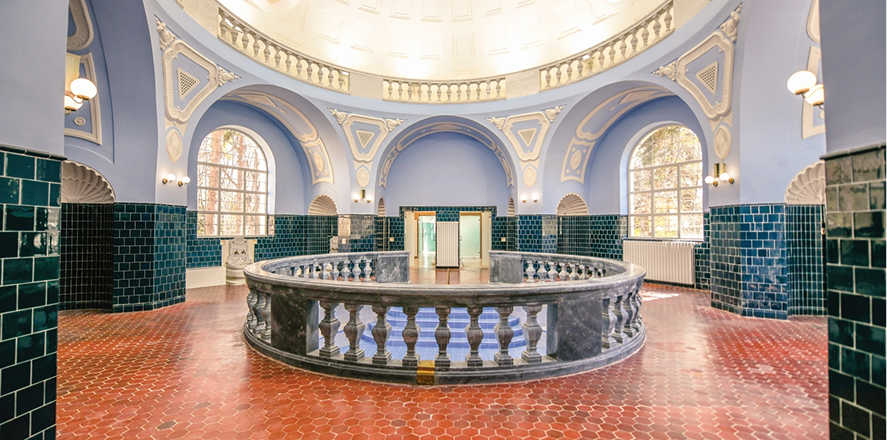
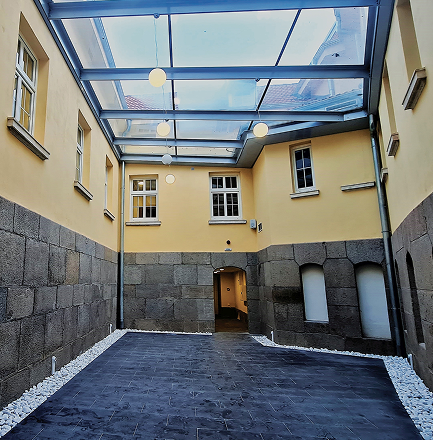
The project encompassed the complete restoration, conservation, and socialisation of the bathhouse, transforming it into a contemporary spa and wellness centre while preserving its authentic architectural integrity and artistic character. The approach combined structural reinforcement with minimal intervention, meticulous façade restoration, and precise conservation of ceramic finishes, wood panelling, decorative details, and stylistic features characteristic of Art Nouveau and Neoclassicism.
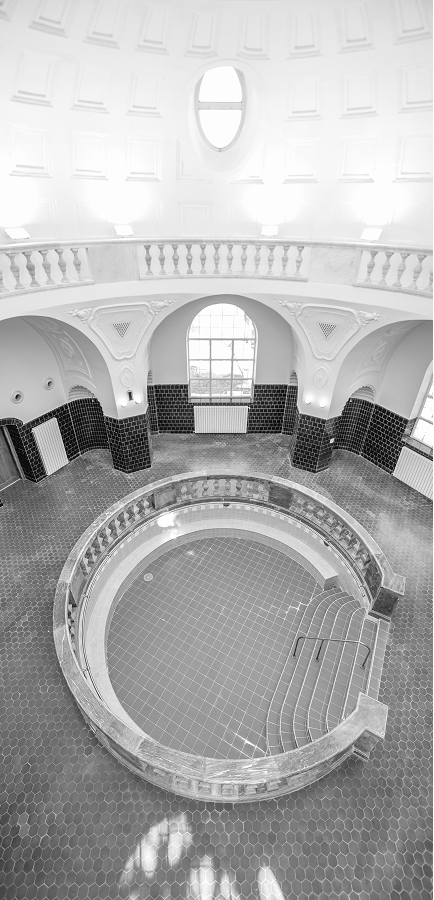
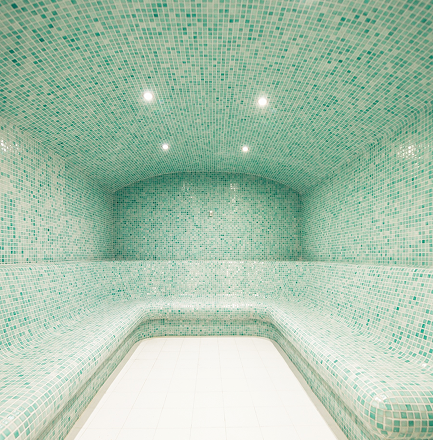
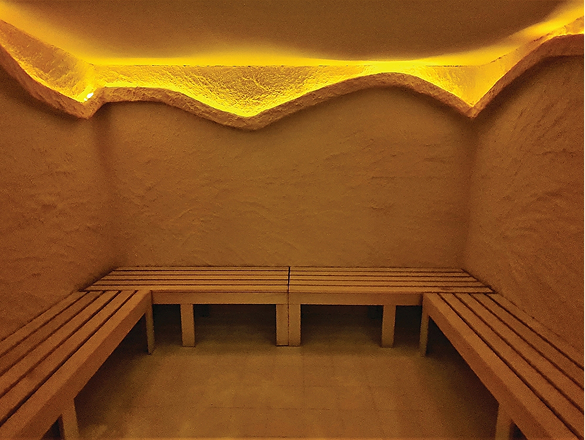
The original “male” and “female” wings were functionally unified through a restored central foyer, now serving as a connecting space to the spa complex and café area. The historic halls with round thermal pools and stone basins were preserved for their original balneological functions, complemented by new treatment rooms, saunas, steam baths, and relaxation areas. The former technical basement was adapted into a modern wellness zone, featuring thermal suites, salt rooms, hydromassage pools, and two private VIP apartments.
A highlight of the project is the energy-efficient use of geothermal resources. The mineral water serves both its traditional healing role and as an energy source — the thermal energy of discharged water from the pools is recovered and used to heat the entire building.
Through the careful integration of cultural heritage and contemporary functionality, the restored Central Mineral Bath in Bankya exemplifies sustainable architectural practice. It reaffirms the building’s social significance and re-establishes its place as a living part of the city’s identity, bridging history, health, and modern design.
Winner of the Building of the Year 2022 Award, the project stands as a national model for the revitalisation of heritage architecture through innovation, respect, and enduring cultural value.